
Geometry Dash broke me before it made me better. I spent an entire afternoon on Back on Track - a level that experienced players would call trivial - failing somewhere around the 70% mark, over and over again. I nearly gave up. Then something clicked. Not the jump timing specifically, but my understanding of what I was actually supposed to be doing. Geometry Dash is not a reaction game. It is a rhythm game, and the moment I accepted that, everything changed.
This guide is everything I wish I had known before I started.
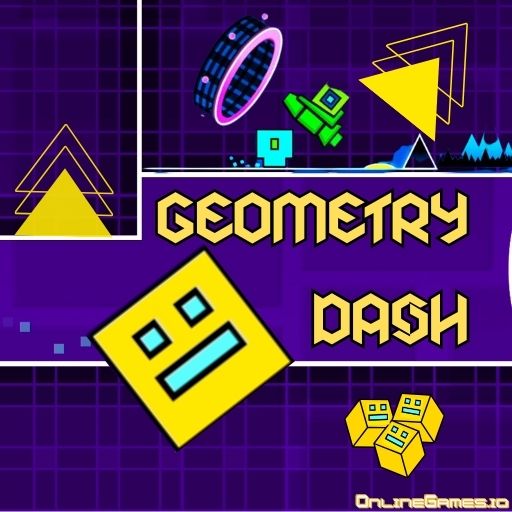
A punishing rhythm platformer where one wrong move sends you back to the start - and every clear feels incredible.
Here is how to get there.
Understanding What Geometry Dash Actually Is
Geometry Dash is a rhythm platformer. Your icon moves automatically from left to right. You control a single input - tap to jump, hold to jump repeatedly. The obstacles come from the level design, and the level design is built around the music.
This is the key insight that separates struggling players from improving ones: the game is a rhythm game, not a reaction game. If you are trying to react to obstacles as they appear, you will fail. The obstacles appear too fast at high BPM for pure reaction to save you.
Instead, you need to memorise the patterns. You need to know the level.
How to Actually Learn a Level
Step 1 - Play from the start, repeatedly: Do not use the practice mode immediately. Play the level from the beginning, die, and restart. Each death teaches you something about the next few seconds.
Step 2 - Identify your death point: Where are you consistently dying? It is usually the same section or two that kills you. Note it.
Step 3 - Use practice mode on that section: Practice mode places checkpoints at regular intervals (or wherever you tap to place them). Use it to isolate difficult sections and practise them in isolation without having to replay the full level each time.
Step 4 - Build muscle memory, not conscious memory: You cannot think your way through a 200 BPM section. Your fingers need to know the pattern without your brain having to process it consciously. This requires repetition - more than feels comfortable.
Step 5 - Return to full runs: Once you can complete the difficult section consistently in practice mode, return to full runs. You will still die. Keep going.
The Difficulty Curve
The official Geometry Dash levels range from Auto (literally impossible to die) to Extreme Demon (genuinely among the hardest things humans can do in gaming). The main campaign sits across the middle of this range.
Stereo Madness, Back on Track: The tutorial levels. One or two obstacles. Designed to teach the basic tap mechanic.
Polargeist, Dry Out: Where new players first encounter real difficulty. The timing windows tighten considerably.
Base After Base, Cant Let Go: Introduce new mechanics including ship mode, where you hold to fly upward and release to fall.
Jumper, Time Machine: Consistently challenging throughout with few safe sections.
Cycles, xStep: Where players who have not developed muscle memory tend to stall permanently.
Clutterfunk, Theory of Everything: The hardest main campaign levels. Expect hundreds of attempts.
The Ship and Ball and Other Game Modes
Geometry Dash is not just a jumping game. Several modes appear throughout levels:
Ship: Hold to fly upward, release to fall. Requires maintaining a specific altitude through narrow corridors. The most technically demanding mode.
Ball: The timing mechanic inverts - tap to switch gravity rather than jump.
UFO: Single taps generate a small upward boost rather than a jump arc.
Wave: Hold to fly diagonally upward, release to fly diagonally downward. Extremely precise.
Robot and Spider: Later game additions with unique timing requirements.
Each mode requires relearning the basic timing intuition from scratch. The game introduces them gradually, but each new mode will set back your progress until you adapt.
The Community and Levels
The official levels are not even the main content of Geometry Dash anymore. The level creator - available in the downloaded version and partially in the browser version - has produced millions of custom levels across every difficulty rating imaginable.
Community levels range from easier than anything in the main campaign to challenges that the world's best players have taken thousands of attempts to beat. The "Demon" difficulty rating in custom levels represents approximately the top ten percent of difficulty overall.
For browser players, the accessible version includes the main campaign levels which are more than enough content for casual to intermediate players.
On the Mental Side
Geometry Dash teaches emotional regulation as much as reflexes. The moment you tense up - when you are at 80% completion on a level that has killed you 200 times - your hands stiffen, your timing degrades, and you die.
The players who beat hard levels are the ones who can maintain a relaxed, consistent approach regardless of how close they are to the end. Easier said than done. But recognising that tension is your enemy is the first step to managing it.
I still play Geometry Dash when I want a challenge that requires total focus. There's nothing quite like the concentration it demands, or the feeling when a level you've been grinding finally falls. It's in the Classroom Connect library - just search for it. Give it a proper go, use practice mode on the hard sections, and don't quit before the rhythm clicks. It will, eventually.